A flue develops one of three problems, and the fix depends on which. First, a clogged flue, packed creosote, a bird or squirrel nest, fallen mortar, or leaves, blocks the passage so smoke rolls back into the room; "i…
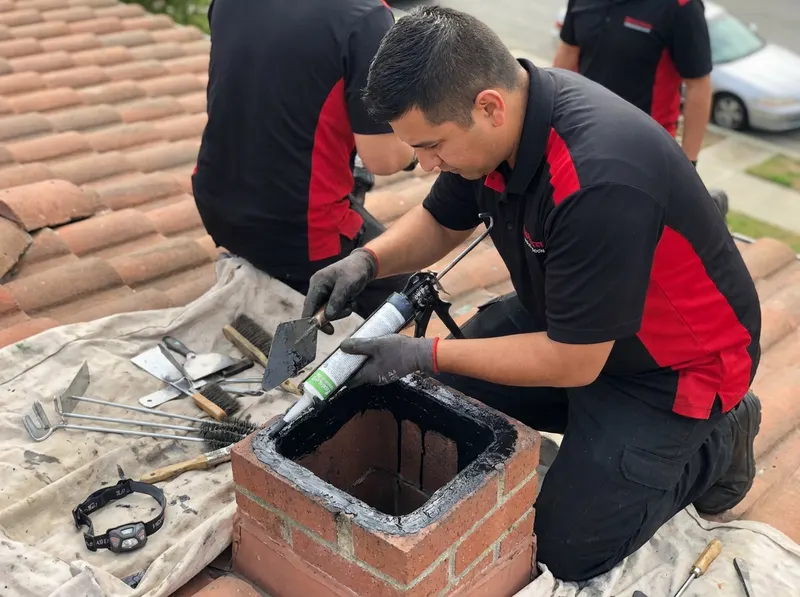
A flue develops one of three problems, and the fix depends on which. First, a clogged flue, packed creosote, a bird or squirrel nest, fallen mortar, or leaves, blocks the passage so smoke rolls back into the room; "i got my flue clogged" usually means either flue cleaning clears it or, if the blockage cracked the liner, a repair follows. Second, the clay tile liner cracks or the mortar joints between tiles crumble; combustion gases and carbon monoxide can then leak into the wall cavity or bedroom above, which is why NFPA 211 treats a breached liner as unsafe to use. Third, a homeowner in a house with a gas furnace or a decommissioned fireplace decides "i want to seal it off" so no draft, moisture, or animals get in.
The repair choices map to those situations. A single cracked joint or a gap where the smoke chamber meets the flue is patched with high-temperature refractory sealant, the lowest-cost route, from about $350. A liner cracked in multiple places, or a chimney with no liner at all, calls for chimney relining: a continuous UL-listed stainless steel chimney flue liner dropped down the flue and connected top to bottom, which restores a smooth, gas-tight passage and is the option most inspectors point to when clay tiles have failed. Sealing off an unused flue is different work again, a top-mounted sealing cap or a locking top-damper closes the flue at the crown while the firebox opening is capped below, blocking rain, nesting birds, and cold downdrafts. To seal off a flue that is still connected to a working gas appliance, the appliance vent must be rerouted first; that combination is checked during the estimate.
A Level 1 inspection covers readily accessible surfaces and confirms a straightforward clog or a minor seal. A Level 2 inspection, required by CSIA and NFPA 211 after a chimney fire, a property sale, or any change to the flue such as relining or sealing, adds a camera scan of the full liner so a hidden crack behind sound-looking tile is not missed. The written photo report shows the homeowner the exact defect before any relining or sealing is quoted.
Houses across Santa Clara bring predictable versions of this. Older masonry chimneys in the Old Quad and near Santa Clara University often have original clay tile liners with hairline cracks that only a camera finds. Newer homes in Rivermark and around Mission College more often have prefab metal flues where the seal-off or a damper cap is the common request. Homes in Forest Park, Laurelwood, Ponderosa Park, Bowers Park, Killarney Farm, and Northside frequently ask about sealing a fireplace they no longer use after switching to central heat. Yes, this is a chimney company; flue work, relining, and sealing are handled directly, not subcontracted.
Every job gets a firm, written price after a free on-site visit.
Tell us about your flue repair & sealing job in Santa Clara and we'll send a clear, written quote, usually the same day.
 Sweepsafe Chimney Sweep