A chimney cap is the metal cover mounted over the top of the flue; its job is to keep rain, leaves, and animals out and to stop sparks and burning embers from landing on the roof. High wind is the most common cause of…
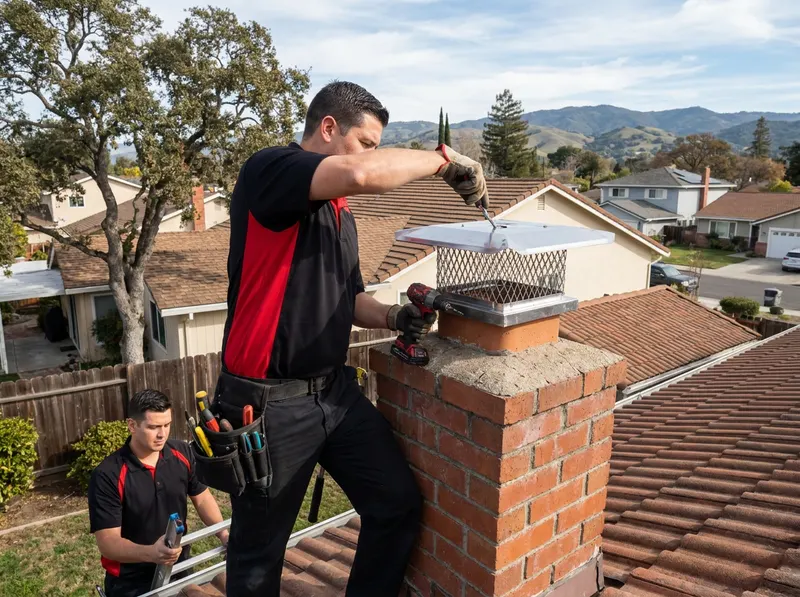
A chimney cap is the metal cover mounted over the top of the flue; its job is to keep rain, leaves, and animals out and to stop sparks and burning embers from landing on the roof. High wind is the most common cause of damage in Santa Clara, the gusts that funnel across the flat Northside and Mission College area rooftops near Great America and Levi's Stadium can lift a friction-fit cap right off the flue tile. A homeowner in Rivermark or Ponderosa Park who finds the cap on the ground, hanging by one screw, or gone entirely is describing the two most frequent repairs: reattaching a cap that blew loose, or replacing one that is bent, rusted through, or missing.
There are three real paths, and the right one depends on the cap's condition. If the existing cap is undamaged and simply blew back from the flue, reattaching it with new corrosion-resistant screws or a fresh clamp is the fastest and least expensive fix. If the cap is rusted, crushed, or the spark-arrestor mesh is torn, a full chimney cap replacement is the better choice, a stainless-steel or copper cap resists the salt-air corrosion common in the South Bay and generally outlasts the galvanized caps that came on many Old Quad and Killarney Farm homes. The trade-off is straightforward: reattachment is cheaper today but pointless on a cap already failing, while replacement costs more up front and typically lasts far longer.
A damaged chimney cap is often paired with a deteriorating crown, the concrete or mortar wash that slopes off the top of the masonry. When water gets past a missing cap it pools on the crown, and Santa Clara's freeze-light but wet winters widen those hairline cracks over successive seasons. Chimney crown repair, sealing cracks with a flexible crown coating or rebuilding a spalled crown, is quoted separately from cap work because it addresses the masonry rather than the flue cover. During the visit the crown, flashing, and top course of brick are photographed so the homeowner sees exactly what is being repaired.
Cap and crown condition are part of a Level 1 inspection under NFPA 211, the National Fire Protection Association standard for chimneys, and the Chimney Safety Institute of America (CSIA) identifies a sound, correctly fitted cap as a basic barrier against water damage and flue blockage. Any customer who says they have damage to the chimney cap and wants someone to take a look at and potentially fix it can send a rooftop photo to (408) 550-9909; a free on-site estimate confirms whether the cap needs reattachment, replacement, or crown work before a price is set. A single-flue cap is a common, in-stock size; oversized, multi-flue, and custom copper caps may be ordered and are quoted after measuring the flue opening on site.
Every job gets a firm, written price after a free on-site visit.
Tell us about your chimney cap repair & replacement job in Santa Clara and we'll send a clear, written quote, usually the same day.
 Sweepsafe Chimney Sweep