A chimney water leak rarely comes from the flue itself. In Santa Clara's older housing stock, the 1920s, 1950s bungalows around the Old Quad and near Santa Clara University, the most frequent cause is failed step…
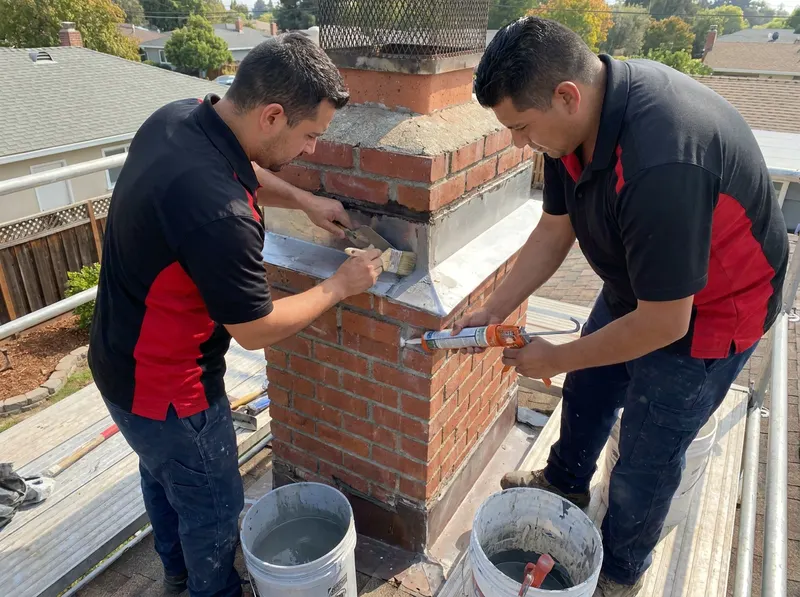
A chimney water leak rarely comes from the flue itself. In Santa Clara's older housing stock, the 1920s, 1950s bungalows around the Old Quad and near Santa Clara University, the most frequent cause is failed step flashing, the metal seam where the chimney passes through the roof. When the sealant behind that flashing dries out, winter rain runs down the chimney exterior and shows up as a brown ceiling stain a few feet away from the actual entry point. A Level 1 inspection under NFPA 211 covers the readily accessible exterior and is the standard starting point for diagnosing a home chimney water leak.
The second common source is the chimney crown, the concrete slab at the very top. Hairline cracks in the crown let water sit and freeze, and in the flatter roof pitches common in Rivermark and the Mission College area, standing water accelerates that cracking. A crown patch with a flexible sealant runs less than a full crown rebuild, which is why an on-site look matters: the fix ranges from a $250 patch to a larger rebuild depending on how far the cracking has spread. Missing or rusted chimney caps are a third source, an open flue in the newer builds around Killarney Farm and Ponderosa Park lets rain fall straight down the chimney.
Waterproofing addresses a different problem: porous brick. Older masonry in Northside, Forest Park, Bowers Park and Laurelwood absorbs rain like a sponge, and after several wet seasons the salts inside the brick push the surface off in flakes, a condition called spalling. A breathable siloxane or silane waterproofing sealer, applied per manufacturer coverage rates of roughly 100, 150 square feet per gallon, lets trapped moisture escape as vapor while blocking liquid rain. Sealing spalled brick before it worsens is far cheaper than replacing courses of masonry later. A vapor-permeable product is important, a non-breathable paint or acrylic can trap moisture and make spalling worse, so the sealer type is worth confirming.
Deciding what you need depends on the symptom. If you see a fresh ceiling stain only after heavy rain, the flashing or crown is the likely culprit and a targeted repair fits. If the brick itself is flaking, crumbling, or leaving grit at the base, waterproofing the masonry is the right step. If water is entering from more than one point, the Chimney Safety Institute of America (CSIA) recommends a fuller Level 2 inspection so the repair isn't guesswork. The free on-site estimate covers this diagnosis so the source is identified before any dollar is committed. Note the edge case: an active, dripping leak during a storm may need a temporary cover first, then the permanent repair once the masonry has dried, since sealers do not adhere to wet brick.
Every job gets a firm, written price after a free on-site visit.
Tell us about your chimney leak repair & waterproofing job in Santa Clara and we'll send a clear, written quote, usually the same day.
 Sweepsafe Chimney Sweep